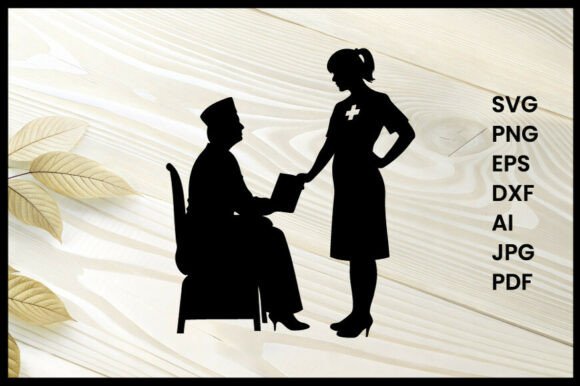
A Trustworthy Silhouette for Caregiver-Themed Embroidery
When a design file lands in my project folder, the first thing I do is imagine it stitched out. I look past the digital preview and think about thread, fabric, and the hands—or machines—that will bring it to life. Today, I’m considering the Nurse Assisting Silhouette Illustration for a real project: a custom embroidered tote bag intended as a heartfelt gift for a nurse graduating from a veteran care program. This is the lens I’ll use for this review.
The Immediate Emotional Pull of This Design
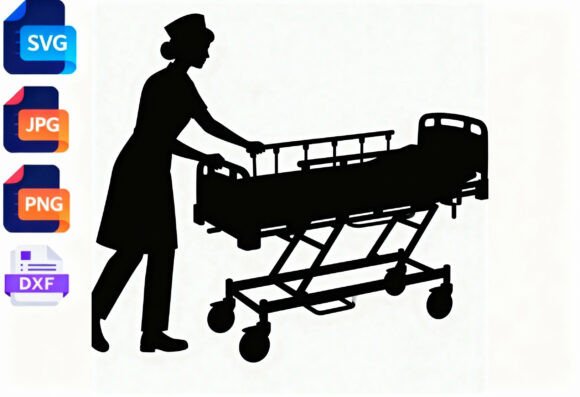
The silhouette presents a quiet, powerful moment: a veteran patient consulting with a nurse. The composition is instantly recognizable and deeply respectful. There’s no excess detail, which is a significant advantage for machine embroidery design. The clean, bold shapes translate directly into clear stitch paths. The mood is professional, compassionate, and dignified—it speaks to appreciation and trust. This isn’t a casual, whimsical graphic; it feels intentional, suitable for projects where the theme of care and assistance is central.
Where This Design Finds Its Natural Home
In my practice, I see this embroidery file fitting beautifully into a specific niche. It’s ideal for personalized gifts within medical communities: for nurses, caregivers, or veterans themselves. Think beyond the tote bag. It would be elegant on a custom apparel item like a classic sweatshirt or a crisp apron for a home health aide. As a embroidered patch, it could adorn a work bag or a uniform. For small shop products, it could elevate a simple pillow cover or tea towel in a boutique focusing on healthcare professionals. The lack of color specification—it’s described as “in Black”—means it’s versatile, but it also asks you to make a critical choice: thread color against fabric color.
Performance on Actual Fabrics and Products
Let’s walk through the practicalities. The silhouette’s solid forms are excellent for fill stitch areas. They shouldn’t create overly dense stitch density if the file is well-digitized, but that’s a key point to verify. On textured fabrics like canvas for a tote, it will hold up well. On thinner fabrics like for a baby embroidery item (perhaps a blanket for a nurse’s newborn), you’d need careful stabilizer selection to prevent puckering. On dark fabric, using a contrasting, bright thread for the silhouette itself would be essential to maintain that powerful visual impact.
The design’s strength—its clean lines—also guides its best applications. It would shine on flat surfaces: towels, pillow covers, the front of a sweatshirt. On curved surfaces like caps, the longer, continuous shapes should fare well, but you’d need to check how any very small interior details (like the potential space between figures) translate at a smaller hoop size. This is a design where its success hinges on clarity, so scaling it down too much for a tiny item might lose that crispness.
Scenarios That Demand Extra Attention
Every design has its careful-use cases. For this nurse silhouette, I’d proceed cautiously on stretchy fabrics without excellent stabilization, as the solid fills could distort. Also, on products destined for frequent washing, like kitchen towels, a robust thread choice and good digitization (to avoid loose stitches) are non-negotiable to preserve the design’s integrity. Because the theme is so specific, its use in a broader craft business context might be niche; it’s not a generic holiday design. But within that niche, its visual appeal is high and directly supports customer trust and professionalism in your finished product.
The Impact on Your Project’s Value and Reception
Using this design isn’t just about stitching a graphic; it’s about conveying a sentiment. On a gift, it immediately communicates thoughtfulness and recognition of a noble profession. On a small shop merchandise item for an Etsy seller focusing on healthcare appreciation, it adds authentic value and brand consistency. The handmade presentation gains a layer of meaning. For commercial embroidery projects, perhaps for a clinic’s staff uniforms or promotional items, it offers a ready-made, respectful asset.
However, this also means you must consider your audience deeply. A generic craft fair customer might pass it by, while a targeted online audience seeking “nurse gifts” or “veteran support” items would likely engage strongly. Its giftability is exceptional for the right recipient.
Practical Notes from the Embroidery Desk
Before you commit this design to a final project, here’s my standard checklist. Test the design on scrap fabric first, ideally the same material as your final product. This reveals true stitch density and any potential hiccups in the file. Check thread color contrast meticulously; on light backgrounds, a dark thread for the silhouette is obvious, but on mid-tone backgrounds, you might need to test to ensure it pops. Since details aren’t listed, inspect small details in your embroidery software preview—are the figures distinct, or could they merge into a blob if stitched small?
Always use proper stabilizer for your fabric type; this design’s solid areas demand it. Compare light and dark fabric backgrounds in digital mockups to plan your product line. Crucially, the product description states “JUST DOWNLOAD AND PRINT YOUR OWN YOU CAN ALSO USE THIS FOR ANY PRINT-ON-DEMAND SERVICE.” This suggests broad usability, but for any craft business or commercial embroidery use, you must confirm licensing before selling finished items. Does “use this for any print-on-demand service” explicitly cover selling digitally embroidered products? Verify this to protect your business.
Finally, consider its role as a digital embroidery file in your asset library. It’s a strong, thematic design you can deploy for specific client requests or product ideas. It might not be your everyday go-to, but when the project calls for a design honoring care and assistance, this silhouette is a trustworthy, ready-to-stitch option that carries a quiet, powerful message.